
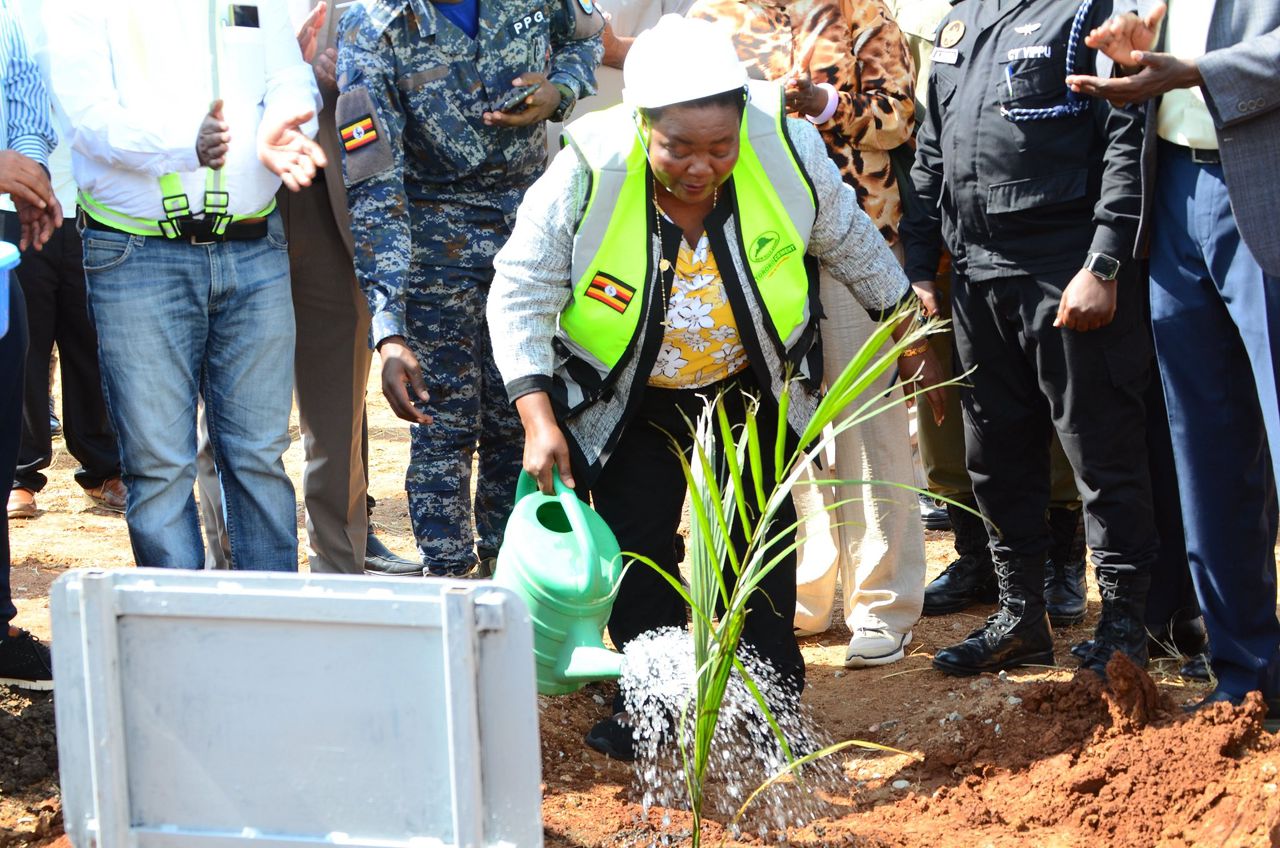
Prime Minister Robinah Nabbanja has directed contractors to expedite the completion of outstanding civil works at the Moroto Clinker Factory in Katikekile, noting that the project is critical to reducing Uganda’s dependence on imported clinker used in cement production.
During an inspection tour of the factory on Tuesday, Nabbanja said government is keen to see the facility become fully operational as soon as possible to support local manufacturing and reduce the country’s import bill.
The Prime Minister was accompanied by Minister for Science, Technology and Innovation Monica Musenero, State Minister for Karamoja Affairs John Baptist Lokii, State Minister for Environment Beatrice Anywar, and State Minister for Disaster Preparedness Musa Ecweru, among other officials.
Nabbanja noted that Uganda currently spends between US$200 million and US$300 million annually on clinker imports, stressing the need to develop local production capacity to save foreign exchange.
She said once operational, the Moroto facility will produce clinker, a key raw material used in cement manufacturing, thereby reducing import dependence and supporting the country’s industrialization agenda.
“The establishment of this factory will reduce our import bill and contribute to the socio-economic development of Moroto in particular and Uganda at large,” Nabbanja said.
The factory is expected to create jobs, stimulate economic activity in the Karamoja sub-region, and support government efforts to promote value addition and import substitution.
Government officials said the project is part of a broader strategy to harness local mineral resources to drive industrial development and strengthen Uganda’s manufacturing sector.
The Prime Minister’s directive comes amid ongoing government efforts to expand domestic production and reduce expenditure on imported industrial inputs; a move officials say is central to achieving sustainable economic growth.
